
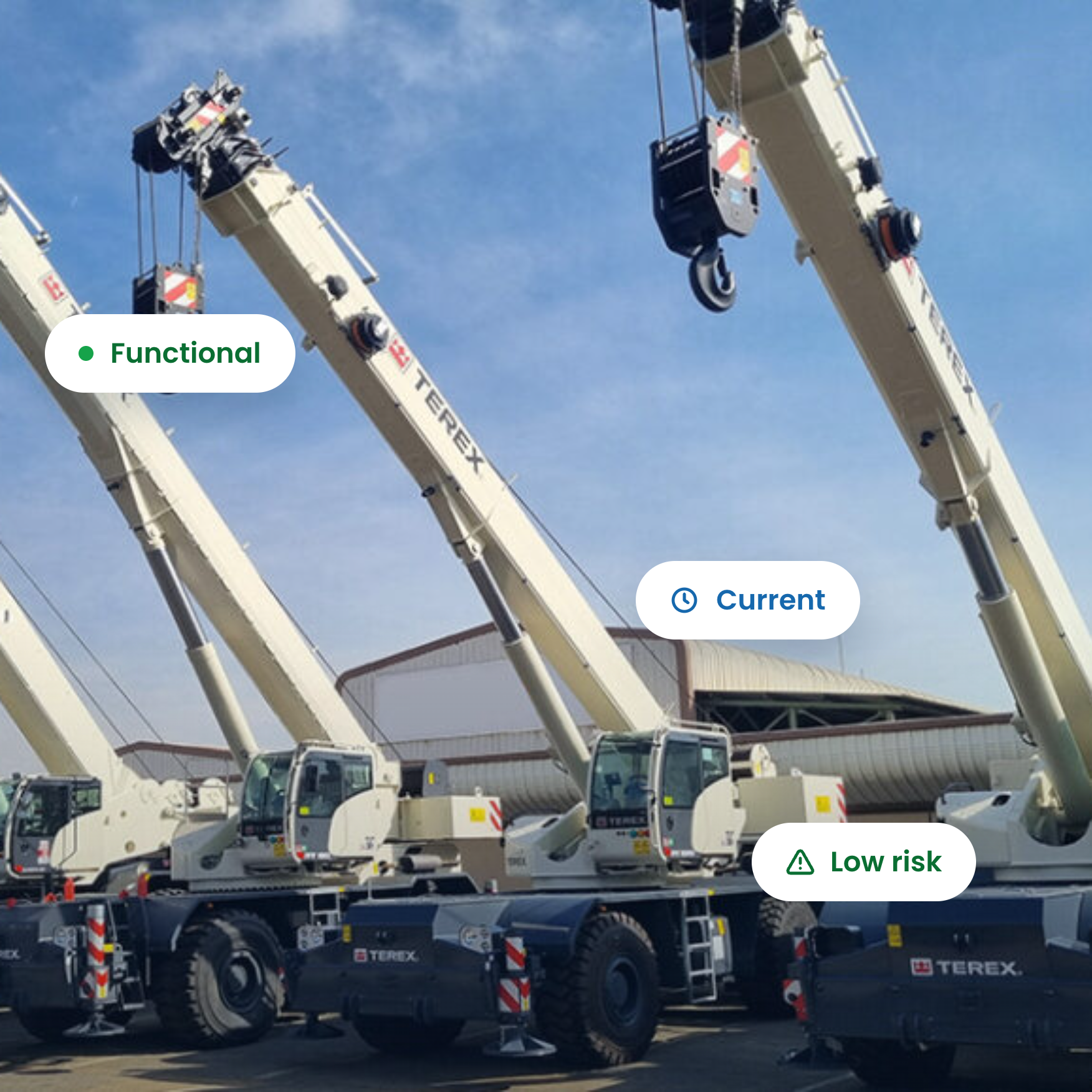
Own your fleet, top to bottom.
You’re accountable for every asset on your sites — what condition it’s in, whether it’s certified, and what happens if it fails. Nova keeps all three in one place.
When something fails, the question is always “did we know?”
There are only two answers, and neither is comfortable. Either nobody knew, which is a systems failure. Or somebody knew, it was written down somewhere, and it never reached the person who could act on it, which is worse, because it’s on record.
Most asset owners aren’t short of information. They’re short of one place where it accumulates into something you can act on and defend.
Sound familiar?
-
The register drifted
It was accurate the day it was built. Then assets moved site, things were decommissioned, new equipment arrived — and the spreadsheet stayed where it was.
-
The evidence is scattered
Inspection sheets in a folder, certificates in an inbox, defect notes on somebody’s phone. Fine until an auditor asks for a specific asset on a specific date.
-
Warnings don’t accumulate
A check fails, gets noted, gets fixed or doesn’t. Nobody sees that it’s the fourth time this year, because nothing joins those four moments together.
What changes with Nova
-
A register that stays current
It updates as a by-product of your team inspecting things. If someone inspected it, you know it exists and when it was last seen.
-
Three indicators, not one number
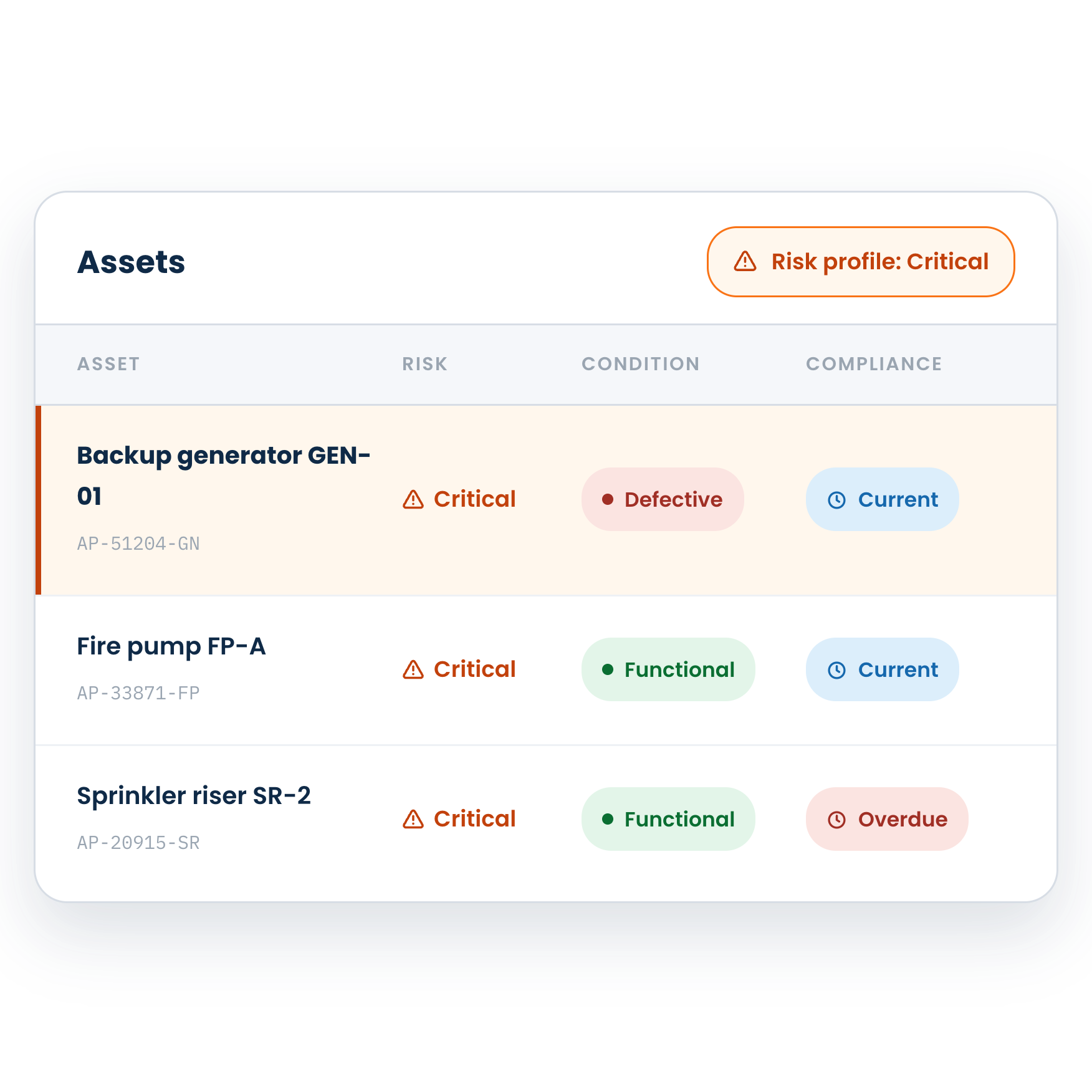
Condition, compliance, and risk profile stay separate. Nothing averages away, and nothing shows green because two out of three were fine.
-
Evidence that assembles itself
Every inspection timestamped, attributed, and retained at checkpoint level. Exportable to hand over directly.
Knowing what you own is half the job.
The other half is being able to prove it’s safe, and those are genuinely different tasks. A register tells you what exists. It doesn’t tell you whether the thing is sound, whether its certification has lapsed, or whether it’s the one asset on site you can’t afford to lose.
Nova holds condition, compliance, and risk profile as separate indicators — so how many critical assets are defective right now? is a question with an answer rather than an afternoon’s work.
Every plan includes unlimited users.
Asset owners are almost always headcount-constrained, and per-seat pricing turns “should this technician have access?” into a budget conversation. Nova charges one flat monthly fee whatever the size of the team.
Frequently asked questions
The register populates as your team inspects, so you get value from the first round rather than after a data migration project. Health indicators become meaningful once each asset has been through its checks once.
Inspections run on the phones they already carry, against checklists you define. Most teams find the mobile side needs a walkthrough rather than training — the checklist tells them what to check.
Yes. Asset classes define what fields and checks apply, so vehicles, fixed plant, and safety equipment can live in the same register without being forced into one another’s shape.
See it against your own asset base.
A short demo using your asset types and your reporting obligations.
