
When you claim, they ask what you knew.

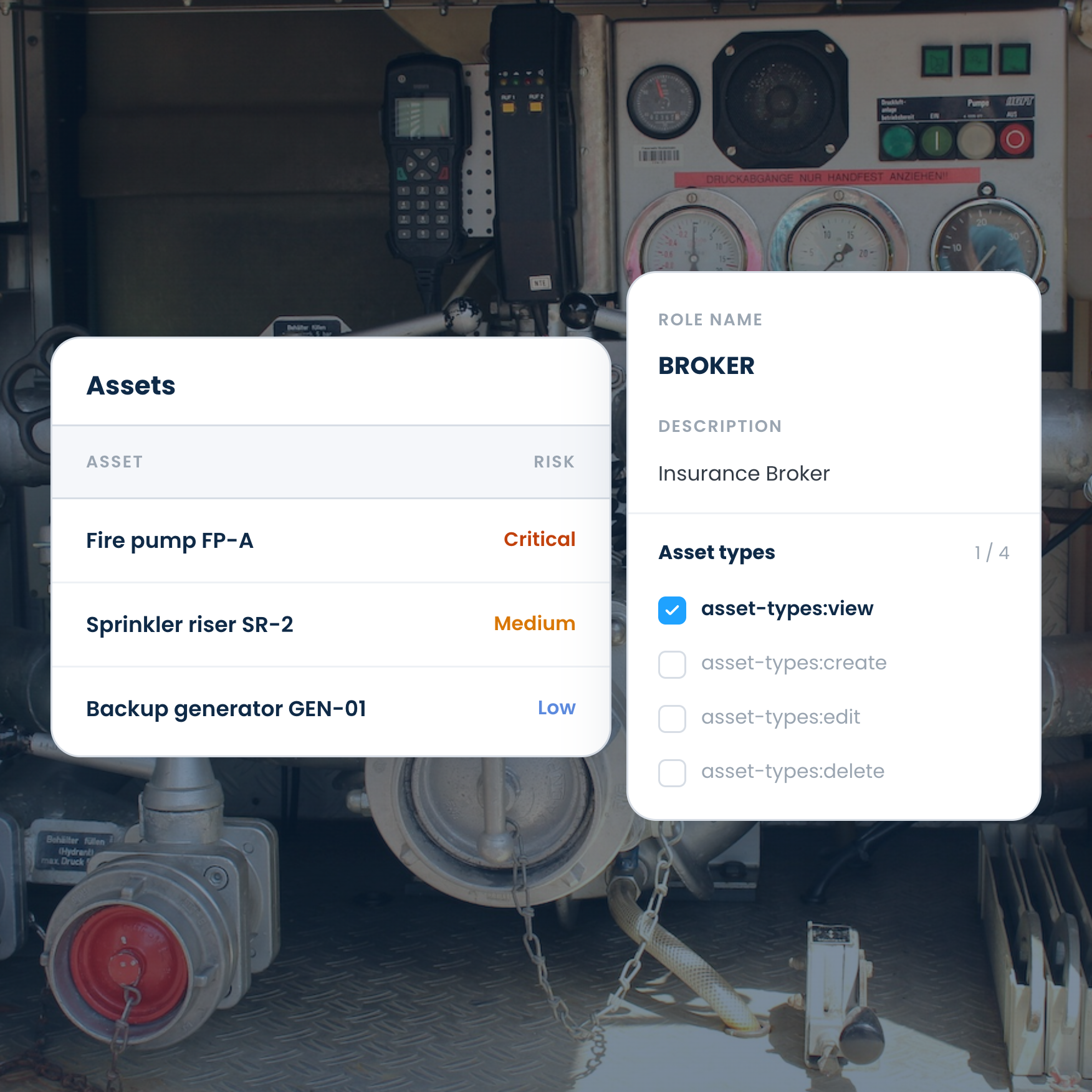
Inspection records, findings and close-outs in one place and a view of it you can give your broker, scoped to what you choose and revoked whenever you want.


Insurance_Hero_Square

THE CLAIM REALITY

The loss adjuster’s first question is never about the fire.


It’s about the eighteen months before it. When were the extinguishers last serviced. Who inspected the panel. What did the last survey find and what did you do about it.

Most businesses have done the work. What they don’t have is it in one place, in order, with dates and names — so the answer becomes a fortnight of searching, and a fortnight of searching looks like something even when it isn’t.

The record isn’t what protects you. Being able to produce it is.


Your policy contains a maintenance schedule. Somebody should be tracking it.

Commercial policies carry conditions and warranties, systems to be maintained, inspections to be carried out, records to be kept. They’re written into the cover and they’re rarely tracked anywhere near the assets they apply to.

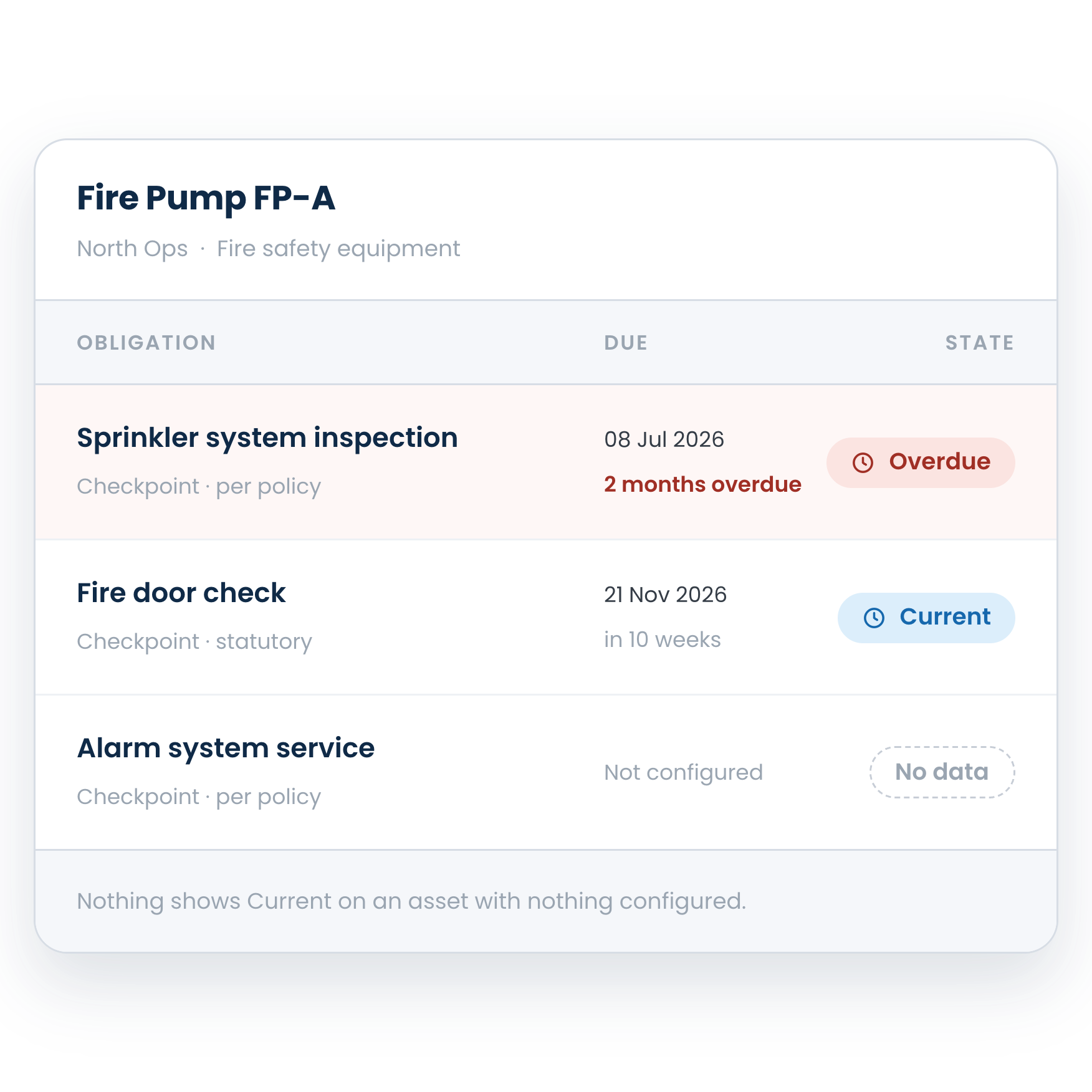
In Nova they’re obligations like any other. A condition requiring a system to be inspected on a cycle sits against that system, on its own clock, and shows Overdue the moment it lapses. Instead of at renewal, when somebody reads the schedule again.

  • Policy-driven checks tracked alongside statutory ones
  • Each on its own frequency, against the asset it applies to
  • Overdue the moment one lapses, with the specific item named
  • Nothing shows Current on an asset with nothing configured
Insurance_Policy_Checks_Square

Every survey ends in a list. Most lists end in a drawer.

A risk engineer visits, produces recommendations, and attaches deadlines to them. Between that visit and the next renewal, those recommendations are tracked in a spreadsheet, an email thread, or nowhere.

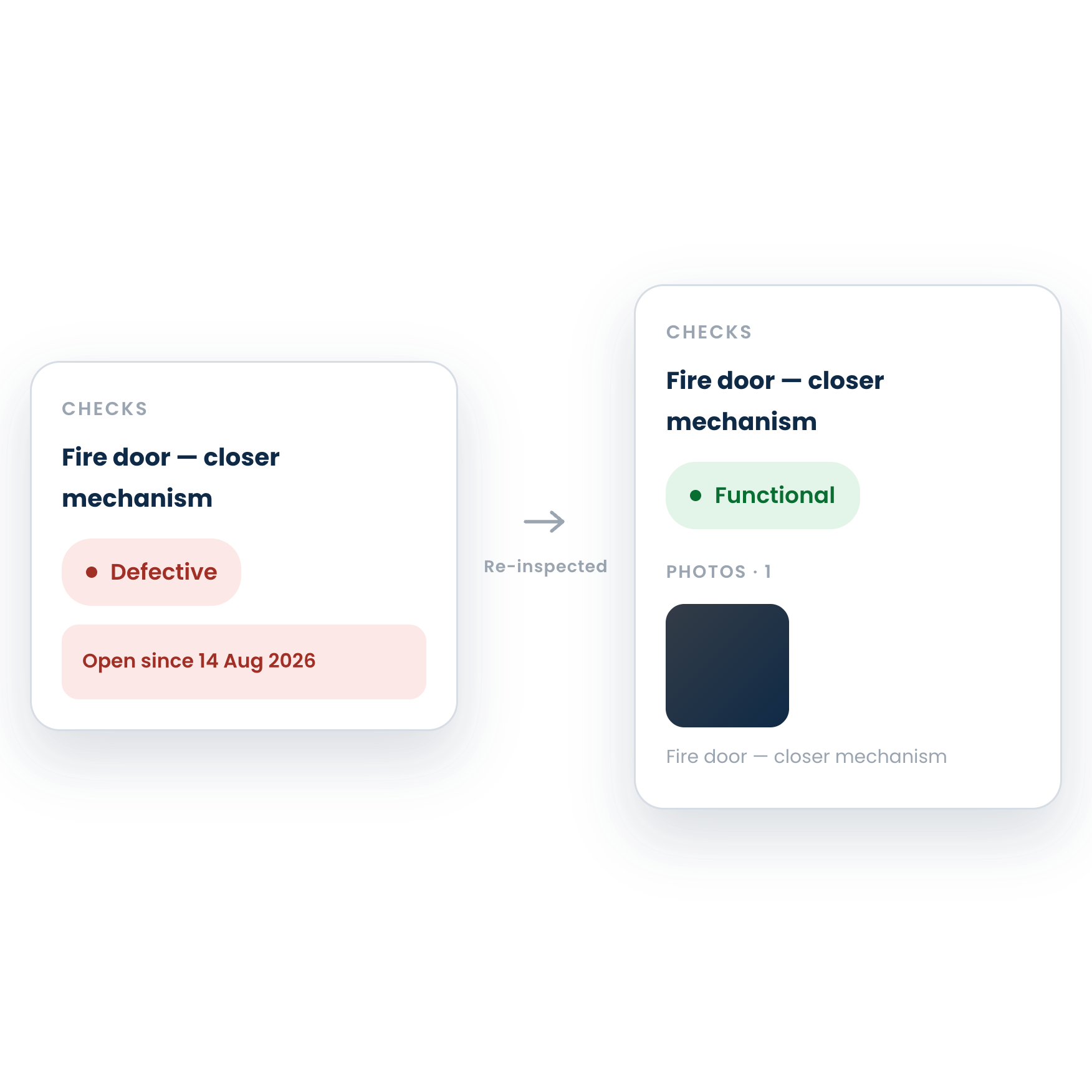
Recorded as checks against the assets they concern, they behave like everything else in Nova; open until closed, evidenced when they are, and visible to whoever you’ve given access to. At renewal, “we completed eleven of thirteen and here’s the evidence” is a different conversation from “we think most of them were done.”

  • Survey recommendations tracked against the specific asset
  • Open until re-checked and passed — nothing closes itself
  • Photo evidence of the remediation attached
  • Visible to a broker or risk engineer, if you grant access
Insurance_Survey_Recheck_Square


Underwriters price what they can see.


Where an underwriter can’t see, they assume and they assume conservatively, because that’s their job. A submission supported by a live inspection record describes the risk you actually run, rather than the one implied by an absence of information.

That doesn’t guarantee anything. Loss history, sector and market conditions still do most of the work. But it moves the conversation from what you say you do to what you can show.


Brokers: give your book something they’ll actually use.

Risk management advice is easy to give and hard to evidence. A broker who can hand a client a working system — and see what’s happening in it — has a renewal conversation nobody else in the market is having.

Clients grant access; brokers see the record. Either party can start it.

Frequently asked questions

If I give my insurer access to every defect I’ve found, am I handing them a reason to refuse a claim?

It’s the right question to ask. At claim time an insurer wants to know what you knew and what you did — and a record showing findings raised and closed out demonstrates a working programme. Having nothing to show doesn’t read as diligence, it reads as being unable to answer. You also control the access: what’s shared, with whom, and for how long, and you can withdraw it.

Will this reduce our premium?

We won’t claim that. Pricing depends on loss history, sector and market conditions far more than on any one system. What evidence does is let an underwriter price the risk you actually run instead of assuming.

Can operators complete pre-use checks quickly?

The check list is defined per truck type, so an operator sees only what applies to the machine they’re on.

 
Can we produce a pack for a claim file?

Every finding sits on a searchable record with its full history and evidence attached, and a broker or insurer you’ve granted access to can see it directly. An exportable pack isn’t available yet.

 
Does Nova tell us what our policy requires?

No. You configure the checks your policy conditions and your regulator require. Nova enforces the schedule you set and evidences what was done — it doesn’t read policy wording or advise on cover.

 
Can we show an auditor what was found and when?

Every finding is on a searchable record with photo evidence attached to the specific component, viewable on screen at any time.

 
We’re a broker. How do we offer this to clients?

Talk to us. We’re working through how this best fits broker relationships.

Have the renewal conversation with evidence.

A short demo using your assets, your policy conditions and your last survey.